+web.jpg)
Rust patina, whether it is an applied finish or the actual rusting of iron or steel, is beautiful in its own organic way. It is used in many commercial applications, but is also incorporated into home designs. The fireplace is created with plates of rusted steel.


rusted steel fireplace

The following are photos of the first designer gas station in Spain, just outside of Madrid. The curved canopies are made out of corten steel plates and left to rust naturally.


In order to create a rust patina, there are several items to pay attention to. You must start out with special paints, whether iron, copper or bronze, that are specifically made for this purpose. These water-based, acrylic paints contain a large number of actual metal particles, rather than mica flakes or pigment. The finely ground metal flakes create the look of a true metal surface. One applies a solution that speeds up the natural oxidation of the metal to develop the rust patina.
When applying the rust solution, careful attention needs to be paid to the product's instructions. Because the solution is usually a mild acid, proper precautions should be taken, such as gloves meant for chemical protection and a face mask.
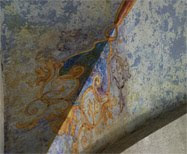
The next photo is a class sample from the All Aglow: Patinas and Metallics class at my studio.
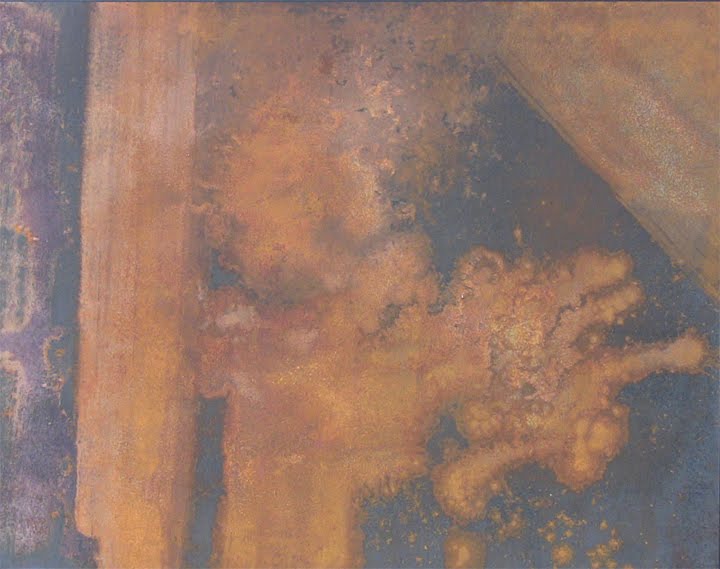
All Aglow class sample
When I moved into the old warehouse studio, this is one of the doors I needed to finish:

Nice!
After I filled in the texture of the wonderful "wood", I primed and then painted two coats of iron paint. Then the fun began! Several rust patina solutions were applied in every which way. I think the door is touched more than any other door I've seen! One caveat: because the rust patina is a result of a very organic process, it is not possible to accurately predict a specific shade of rust. The results are based on many conditions, such as temperature, humidity and air quality. Samples are definitely a good idea before beginning the final finish.
And, yes, it is sealed. You should definitely seal a rust patina if it is going to be exposed to extreme weather or if folks will come into contact with the finish.
However, do not seal with a polyurethane. Seal your rust patina with a high quality acrylic or solvent-based sealer.

studio door after




 Posts
Posts