Tuesday, April 13, 2010

Oversized damasks

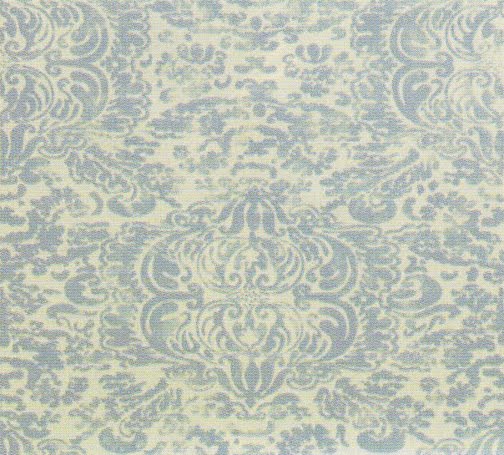
Yes, I do love damasks, especially oversized damasks. They catch my eye every time,
especially those incorporated into small, usually glass, tiles. They demand to be admired.

Damask, thought to have originated in Damascus, Syria, is probably the most popular woven pattern with any complexity. It enjoyed enormous favor in Europe from the mid-15th century on and is still favored today.
I am still working on a texture finish of small mosaic tiles with a gold leaf damask pattern. As soon as I get far enough, I'll post pictures.


In the meantime, enjoy these oversized damasks!


Saturday, April 10, 2010

Weekend favorites

Weekends mean fun and favorite things to me. A couple of days off automatically boosts my spirits!

Here are a few of my favorite images and inspirations.


I saw this charming set of cafe doors in Paris, which inspired me…


to create this plaster finish for a client’s powder room:

 
French Indochine finish


In France, this is a must-see store to visit for me. I even love their print ads!


In the book, French Style at Home by Sebastien Siraudeau, I saw this damask settee and


actually based this metallic damask finish on it for a living room. Six panels of varying widths were completed and framed (frames are not on yet here) with molding.


My favorite way to choose a finish for a client is to have them bring me their inspirations;  I’ll take it from there and dream and experiment till we nail it!

Friday, April 9, 2010

Beautiful lime plasters

Once you’ve seen an authentic lime washed wall, you’ll remember it. Touch a smooth lime plaster wall and you’ll remember it. There is something about its sleek, creamy feel…  If you’ve traveled in Italy or France or Mexico, chances are that you’ve seen these mottled, weathered, lime plaster walls.
They seem as hard as stone and that is because they are.


Lime based plasters and paints are mixed with natural pigments only. The pigments must be suitable to mix with the lime or they will not remain stable and fade over time.


Lime plaster has been used for thousands of years. The entire process is long and involved. Limestone is “cooked” until the chunks disintegrate and become a powder known as calcium oxide. This lime powder is then mixed with water and left to slowly age or “slake”. It is this slaked lime, in a putty form, that is mixed with varying amounts of marble dust and sand. The pigments are added at this time. In this day and age, other ingredients are often added to the lime plaster mix.

Generally, several layers are applied to the walls. As the lime dries, the water is absorbed into the wall and the carbon dioxide “slakes” the lime, rendering the material back to limestone. And it is as hard as stone.

Applying lime plasters directly to a latex or alkyd (otherwise known as oil based) painted wall will not work; lime plasters and paints need to have a special base that allows the lime to adhere to it.
Lime washes are created by mixing the lime putty with water to a milky consistency and applying the wash with a brush.  It has a faded, almost pastel look, that appears authentically weathered.  Lime based paints are generally used to let the walls “breathe” rather than locking in humidity. They are excellent for bathrooms and kitchens as they are a deterrent to mold. The original "green" finish.

Doors with blue lime wash Photo by Yann Monel

Photo by Ricardo Labougle


 Lime wash on exterior Photo by Carlos Domenech

 Photo by Carlos Domenech

 Photo by Eric Piasecki

        Photo by Carlos Domenech


Lime wash walls Photo by Simon McBride

Monday, April 5, 2010

I want to live here!

I just fell in love with Claire Basler’s studio/home when I opened the March 2010 issue of Elle Décor UK. An old iron works building on the outskirts of Paris houses this wonderfully talented artist. Claire’s love of flowers and her garden are certainly reflected in her work.

Being surrounded by so much natural light and having the subject you love to paint right at your fingertips sounds heavenly.

The colors mixed with the grays, the old and the new, the shiny and the textured… the combinations work.

Here it is! (All photos from Elle Décor UK, photos by Mads Mogensen)


A few of her paintings (courtesy of http://www.clairebasler.com/):


I love the silver and gold leaf backgrounds in these photos!


Sunday, April 4, 2010

Mariano Fortuny- Did you know he also painted?

When I think of Mariano Fortuny, lush velvets and delicate, pleated silks come to mind.  The “Delphos” dress is a classic. The “Fortuny lampshade” is also. The beautiful damask fabrics, the gorgeous clothes.  His mystique.  What I did not realize is that he was also a very gifted painter. And engraver. And stage and lighting set designer. Some of his inventions set new benchmarks in theater that are still followed today.


La Pedrera de Caixa Catalunya (the museum) in Barcelona, Spain is currently holding an exposition on Fortuny and his works: Fortuny, El mag de Venecia (Fortuny, The Magician of Venice).
Besides viewing his incredible fabrics, clothing and inventions, there are also presentations, discussions and a tactile tour of fabrics. I wish I was in Barcelona! I think they should bring this wonderful display to the USA!


Silk lampshades in Mariano Fortuny 1999 Marsilio Editori


Fortuny velvet


Mariano Fortuny (y Madrazo) was born in Grenada, Spain in 1871. After his painter father’s early death at age 36 of malaria in 1874, his mother moved her two young children to Paris, where Mariano was encouraged to study painting and etching under his uncle’s tuteledge. He was introduced to many of the artists at the time through his family and exposed to many styles of painting.   In 1889, his mother moved the family to Venice. Mariano spent time in both Venice and Paris, before finally settling in the Palazzo Orfei.  Today it is now called the Palazzo Fortuny, as it houses the museum dedicated to Fortuny and his works.

Here are some views of the Palazzo Fortuny:

Palazzo Fortuny exterior in Fortuny by Guillermo de Osma


Palazzo Fortuny exterior in Fortuny by Anne-Marie Deschodt


The Grand Salon in Fortuny by Anne-Marie Deschodt


The library in Fortuny by Anne-Marie Deschodt


Fortuny's studio in Fortuny by Anne-Marie Deschodt


Fortuny worked in oils, gouache and tempera, creating his own color pigments. He favored copper plate etching, which, along with his painting, greatly influenced his later creations in silk and velvet. He learned the subtle use of color and the importance of light to achieve the dramatic effects seen in his textiles.

Here are  some of Fortuny’s paintings:

Una roccia a pareti verticali sulla riva del mare" 1948


Prove alla Scala di Milano


Ritratto di Henriette Fortuny in costume pompeiano, 1935

Here Fortuny painted his own Palazzo:

Interno dell'atelier del pittore a palazzo Pesaro-Orfei a Venezia


http://www.invertirenarte.es/mercadodearte/imagenes/Octubre%2027/duran_fortuny.jpg
Painted by Fortuny's father, Mariano Fortuny Y Marsal (1835 - 1874)

And last, but not least, my favorite:

Schizzo per la decorazione dell'atelier dell'artista a Venezia
Friday, April 2, 2010

A few of my favorite things

Isn't this the cutest thing? When I saw this book, I knew I just had to use it as my Blog Book. It is my calendar of  "assignments," along with topic ideas and potential photos. (I cleaned it up a bit...)

My blog book


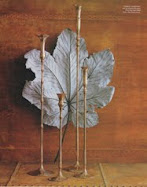
Although I don't remember where I found this photo, I hope to find these candlesticks some day. Anyone know where they are from?


Lately, I've been loving color combinations such as these. The door has a wonderful patina which looks like old lime paint. I love the teal and burgundy together.


I saw this ad last year and have been trying to decide where to try this color combo from Ligne Roset. It's not just the color combo, though. It is the lushness of the velvet in contrast with the aged roughness of the concrete.


Today's favorite things is going to become Friday's Favorites. I'd love to see what items and ideas my fellow bloggers love, too!